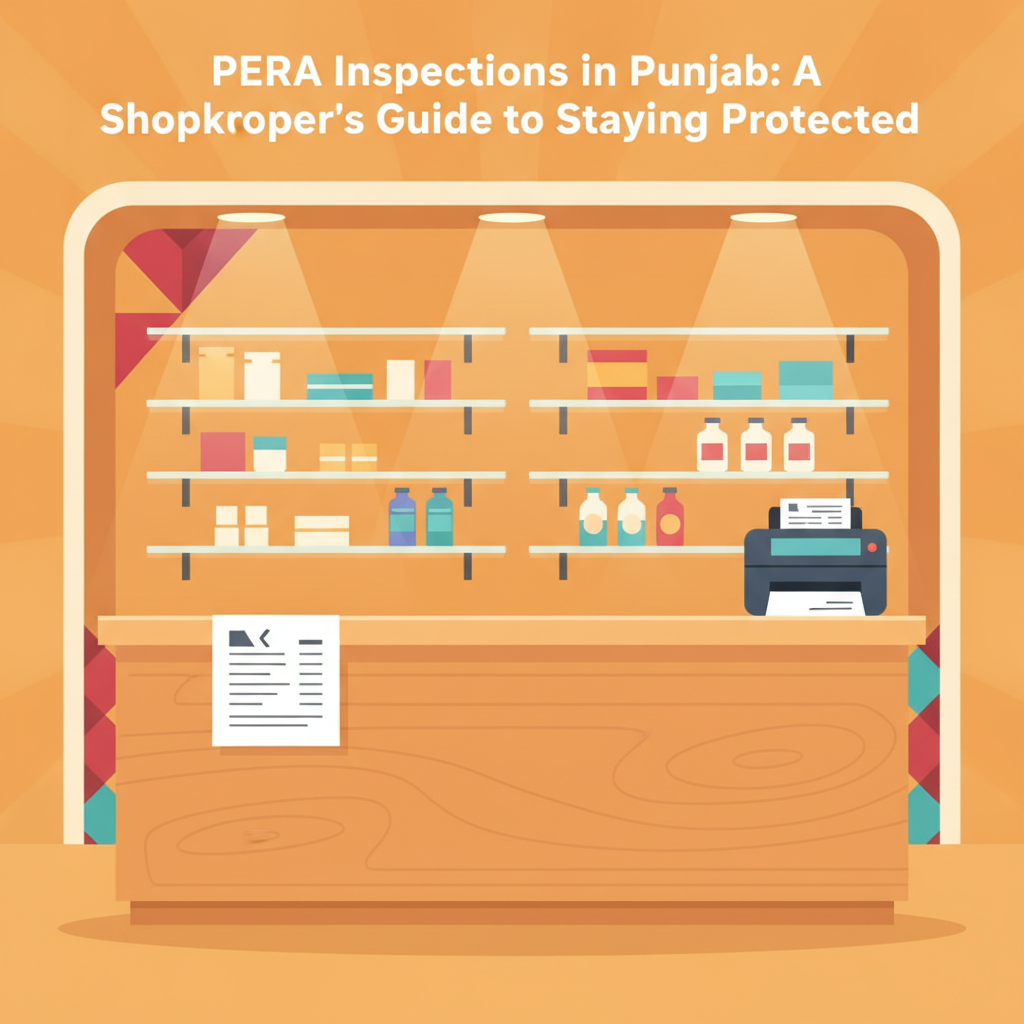
PERA Inspections in Punjab: A Shopkeeper’s Guide to Staying Protected
Following high-profile enforcement actions across Punjab, here is how retail shop owners can handle price inspections, protect their rights, and keep foolproof records.
Every retailer in Punjab knows the uneasy tension that ripples through the bazaar when an inspection vehicle pulls up. Enforcement teams step out with clipboards, demand rate lists, inspect sugar and cooking oil stocks, and scrutinise counter prices. For small grocery stores, general merchants, and superstores, an unannounced visit from price control magistrates or enforcement personnel often turns into heated arguments, heavy challans, or threats of sealing the shop.
That friction reached a national flashpoint when Punjab Chief Minister Maryam Nawaz Sharif ordered the immediate arrest of an officer from the Punjab Enforcement and Regulatory Authority (PERA) after he assaulted a shopkeeper in Rahim Yar Khan. While the provincial leadership made it clear that public servants cannot take the law into their own hands, market inspections are not going away. If you operate a retail outlet, mini-mart, or grocery business in Punjab, learning how enforcement works—and arming your business with watertight records—is essential to protect your livelihood.
The Dilemma Behind Price Control in Pakistan’s Markets
The Punjab Enforcement and Regulatory Authority (PERA) was established under the Punjab Enforcement and Regulation Act to streamline price control, crack down on hoarding, and curb illegal market encroachments. On paper, the goal is straightforward: protect consumers from price gouging on essential kitchen staples.
In practice, retail shopkeepers are frequently caught in the middle. Mandi wholesale rates fluctuate on a daily basis due to transport costs, fuel prices, and seasonal supply bottlenecks. When the wholesale price of pulses, rice, or dairy climbs overnight, the official government price list (nirkhnama) issued by the District Price Control Committee often lags behind.
If you purchase an item from the distributor at Rs 260 per kilogram, but the district list stipulates a ceiling of Rs 250, you face an impossible choice: sell at a direct financial loss, refuse to stock the item, or sell at Rs 270 to cover your basic operating overhead and risk an enforcement raid. When an inspector walks in, claiming "mandi mein mehanga mila tha" without concrete, timestamped evidence will rarely stop a penalty.
Know Your Legal Rights During a Market Inspection
Accountability goes both ways. While officers have the authority to check market compliance, government regulations and procedural standards set boundaries on how inspections must be conducted. Shopkeepers should know the following basic operational rights:
- Verification of Authority: You have the right to politely request official identification and confirm whether the officer is designated under the relevant regulatory framework or local administration.
- Proper Documentation of Violations: If an officer alleges a pricing or hoarding infraction, they must issue a formal, printed or stamped challan detailing the specific section violated and the penalty imposed. Never hand over unrecorded cash penalties without an official receipt.
- Due Process on Premises Sealing: Provincial directives require strict administrative justification, proper notices, and higher-level approval before commercial premises can be arbitrarily sealed.
- Protection Against Physical and Verbal Abuse: As the recent enforcement arrest proved, physical intimidation, abusive language, or damaging store merchandise is strictly illegal. If an inspector crosses the line, note their name, preserve CCTV footage, and lodge a formal complaint via provincial citizen complaint portals and local trade associations.
"Law enforcement personnel are not above the law and cannot be allowed to take the law into their own hands. The government will not tolerate violence against any citizen." — Official statement from the Punjab Chief Minister’s Office regarding retail enforcement conduct.
Why Informal Khata and Handwritten Slips Fail You
Most fines handed down to Pakistani grocers do not happen because the shopkeeper is intentionally hoarding goods. They happen because of poor documentation. When an enforcement officer asks why your shelf price exceeds the notified tariff, pulling a crumpled, handwritten paper slip out of a wooden cash drawer does not count as credible proof.
Handwritten wholesale receipts often lack proper supplier details, itemized batch dates, or clear tax identification numbers. If your cashier charges a walk-in customer Rs 10 more than the marked rate due to a manual calculation mistake, a visiting magistrate can immediately treat that discrepancy as deliberate overcharging. To safeguard your business, your counter billing and purchase records must be fully transparent, digitized, and instantly retrievable.
Checklist: 6 Ways to Shield Your Shop from Enforcement Penalties
Protecting your store requires daily discipline. Implement this operational checklist across your branches to ensure your staff remains calm, compliant, and prepared during any inspection:
- Prominently Display the Daily Rate List: Obtain the daily notified price list from your local market committee or district portal every morning. Post it near the entrance and directly adjacent to your billing counter where customers and visiting officials can clearly see it.
- Maintain a Digitized Supplier Purchase Ledger: Every purchase order, wholesale invoice, and delivery challan from your distributors should be logged digitally on the day it arrives. If an official questions your margin on cooking oil or flour, you should be able to produce the supplier name, purchase price, and date within thirty seconds.
- Issue Itemised Printed Invoices for Every Sale: Eliminate manual estimation at the counter. When every transaction produces an itemised bill showing product names, exact weights, and prices, customers cannot dispute charges, and undercover price checkers cannot allege hidden fees.
- Standardise Shelf and System Prices: Conduct routine checks to ensure the price displayed on the shelf tag matches the exact rate configured in your billing terminal. Discrepancies between the shelf tag and the counter total are the most common trigger for customer complaints.
- Calibrate Scales and Pre-Packaged Weights: Enforcement teams frequently check electronic weighing scales for tampering. Ensure your digital scales are calibrated and certified, and verify that in-house pre-packaged items (such as 1 kg bags of lentils or sugar) match the exact labeled weight.
- Train Staff on De-Escalation Protocols: Instruct your cashiers and floor managers never to argue, crowd around, or shout at visiting officials. Train a single designated store supervisor to greet the inspection team, present the documentation calmly, and request formal paperwork for any noted query.
How CPOS Helps Retailers Maintain Impeccable Records
Modernising your store's operations does not have to be complicated or expensive. Point-of-sale software like CPOS is built specifically for Pakistani retail shops, grocery stores, and mini-marts, turning chaotic record-keeping into clean, structured data.
- Supplier Management with Purchase History: CPOS allows you to record every supplier bill, purchase cost, and wholesale order in one place. When an official inquires about your procurement costs, your complete purchase history is readily accessible on screen.
- Smart Billing with Barcode Scanning: Eliminate manual calculation errors at checkout. With barcode scanning and instant thermal receipt printing, customers receive clear, itemised invoices with accurate item descriptions and prices.
- Real-Time Inventory Tracking: Accusations of artificial shortages or hoarding collapse when you can demonstrate transparent inventory numbers. CPOS tracks stock in real time, alerting you to low inventory and recording exact quantities on hand.
- User Roles and Permissions: Prevent cashiers from manually altering selling prices or making unapproved rate adjustments. Role-based security ensures that only authorised managers can update price tags and product margins.
- Cloud Sync with Offline Billing: Internet disruptions and power outages are a reality in Pakistani commercial hubs. CPOS features an offline mode that allows you to continue barcode billing and thermal printing without an active connection, automatically syncing your data to secure cloud storage once internet access restores.
- Accessible Pricing for Small Businesses: Getting started requires zero upfront software licensing costs. The CPOS Starter plan is completely free, supporting up to 100 sales per day, 1,000 product SKUs, 1 branch, and 1 desktop plus 1 web user. For expanding stores, the Basic plan is just Rs 1,850 per month (up to 3,000 SKUs), while the Standard plan costs Rs 3,900 per month for unlimited SKUs and multiple desktop terminals, backed by a 14-day free trial and a 10% discount on yearly billing.
Turn Inspections from a Crisis into a Routine Check
Government market checks are designed to curb rogue profiteering, but honest retailers should not have to run their businesses in fear of arbitrary penalties or volatile confrontations. By knowing your rights under the law, keeping your daily rate boards updated, and replacing paper clutter with clear, automated billing records, you protect both your reputation and your profit margins.
Take control of your retail operations today. Say goodbye to messy slips, protect your store during market inspections, and start with CPOS free to streamline your inventory, billing, and supplier tracking in minutes.