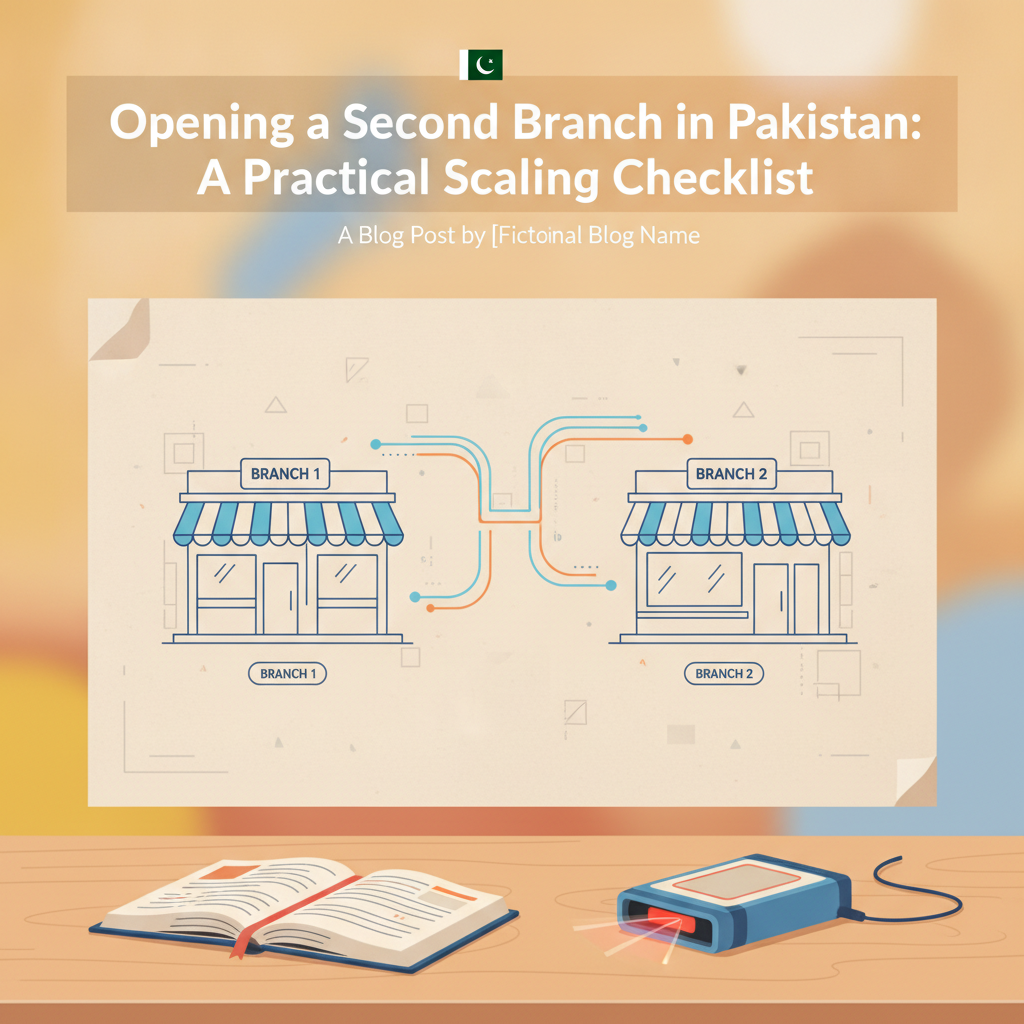
Opening a Second Branch in Pakistan: A Practical Scaling Checklist
Expanding from one successful store to two is the biggest hurdle in retail. Learn how to manage stock transfers, staff permissions, and cash control across multiple outlets.
Every ambitious Pakistani retailer reaches a moment when their first shop feels too small. The daily footfall is predictable, shelves turn over reliably, and regular customers ask why you do not have an outlet closer to their neighborhood—whether that is across town in Gulberg, DHA, Bahria Town, Clifton, or a neighboring commercial market. The natural instinct is simple: duplicate the shop, duplicate the profits.
Yet in Pakistan's retail sector, opening branch number two is notoriously treacherous. Most single-shop businesses succeed primarily because of the owner's personal presence—what local traders call gaddi pe baithna. When you sit behind the counter, you notice if a carton of inventory goes unrecorded. You spot when a cashier enters an incorrect price, you negotiate supplier discounts on the fly, and you personally verify the day-end cash drawer. The moment you open a second branch, your physical presence is instantly cut in half. Without standardized systems, many shop owners find that their sales double while their profits disappear into unexplained shrinkage, unmonitored discounts, and stock chaos.
According to economic data reported by the State Bank of Pakistan, commercial credit and SME advances continue to expand as local merchants invest in growth. But capital alone does not make a multi-branch business work. Before you sign a commercial lease or hire a second sales team, use this practical checklist to determine if your operation is ready to scale safely.
Are You Truly Ready to Expand? The Pre-Lease Reality Check
Before putting down a deposit, evaluate your business against three strict operational benchmarks:
- The 14-Day Absence Test: Can you walk away from your existing shop for two weeks without daily revenue falling, suppliers missing payments, or shelves emptying out? If your first store falls into disarray the minute you are not physically watching the cash drawer, opening another outlet will multiply your headaches, not your wealth.
- Separated Working Capital: A second branch rarely covers its own operational costs in month one. You need sufficient liquidity to cover at least three to six months of the new branch's fixed overheads—rent, staff salaries, electricity, and initial stock replenishments—without siphoning working capital away from your primary store.
- Proven Product-Market Fit: Ensure that your initial success is built on a repeatable model rather than a one-off geographic fluke. A grocery or cosmetics store that thrives in a high-density, pedestrian-heavy bazaar may struggle in an upscale commercial plaza with car-only access unless pricing, assortment, and merchandising are adjusted accordingly.
Navigating Pakistani Commercial Realities: Beyond the Rent
Budgeting for a second retail outlet in Pakistan requires calculating several hidden operational costs that go well beyond the agreed monthly rent:
Advance Rent and Security Deposits: Most commercial landlords in major Pakistani markets demand anywhere from three to six months of advance rent alongside a non-trivial security deposit. In older commercial centers, you may also encounter goodwill or pagri structures, which lock up significant cash upfront before a single sale is rung up.
Backup Power Infrastructure: With commercial electricity tariffs remaining high and localized load shedding or grid fluctuations common across urban markets, your second store cannot afford downtime. Budget for a reliable UPS system or dedicated solar inverter setup from day one. If your billing counter freezes during peak evening shopping hours, you lose both customer patience and immediate cash flow.
Logistical Proximity: Can your existing delivery vehicles or suppliers deliver to both locations easily? If your second branch is situated too far across a congested metropolitan area, transporting stock transfers between branches can incur high fuel costs and lengthy transit delays.
The 6-Point Checklist for Opening Your Second Store
To keep operations smooth and transparent across both counters, work through these six foundational steps before your grand opening:
- Standardize Your Master Catalog: Never allow the second branch to invent its own product codes or SKU names. Standardize all item descriptions, barcodes, cost prices, and standard selling prices in a centralized database before loading stock onto the new shelves.
- Assign Role-Based Access: Do not give cashiers or branch managers full administrative rights to your systems. Counter staff should only be permitted to bill items and look up prices. Master pricing changes, wholesale purchase entries, and inventory write-offs must require owner or administrator authorization.
- Document Formal Stock Transfer Procedures: A product should never move from Store A to Store B on a casual phone call or handwritten slip. Every transfer must generate an outbound dispatch note and require an inbound digital confirmation from the receiving store manager.
- Establish Daily Cash Reconciliation Protocols: Cash drawers must be counted and balanced at the end of every shift. Match the physical cash count against digital sales totals every evening, logging any discrepancy immediately rather than waiting for an end-of-month review.
- Prepare for Internet Outages: Relying on a system that works solely when the internet is active is dangerous. Ensure your checkout counter can scan barcodes, issue receipts, and record transactions in offline mode, syncing the sales figures to your central database once connectivity returns.
- Set Up Centralized Remote Monitoring: You cannot be in two markets at once. Establish real-time visibility through a mobile application or cloud dashboard so you can view branch-level sales totals, monitor daily margins, and receive low-stock alerts wherever you are.
Stock and Cash: The Two Leaks That Break Branch Expansion
When multi-store retailers in Pakistan fail, the post-mortem almost always reveals one of two culprits: uncontrolled inventory leakage or undocumented counter discounts.
1. Inter-Branch Stock Discrepancies
When stock sits in two different physical locations, inventory shrinkage becomes much harder to pinpoint. If an item shows as available in your head office records but is missing from Branch 2's shelf, staff often blame transit loss, supplier shortfalls, or simple counting mistakes. Without itemized barcode scanning at both dispatch and receipt, you will never know whether the carton was stolen, misplaced, or simply never packed.
"Retail scaling fails when the owner treats a second store like a second home rather than an independent operational node with strict verification at every entrance and exit."
2. Counter Discretion and Unauthorized Discounts
In a single shop, an owner often offers discretionary discounts to loyal customers. However, once you hire a branch manager and sales staff for an expansion branch, discretionary pricing becomes an open door for revenue leakage. Cashiers can easily charge customers full retail price while recording an unauthorized discount in the books, pocketing the margin difference. Clear permission levels and non-negotiable barcode pricing protect your store from this leakage.
How CPOS Helps You Manage Multiple Branches
Managing two or more locations does not require an expensive IT infrastructure or complicated enterprise software. CPOS provides point-of-sale software designed specifically for businesses in Pakistan, giving you complete oversight of multiple branches from a single unified view.
- Multi-Store Management From One Dashboard: Monitor sales, track daily profits, and record expenses across every branch from a single dashboard. You can compare how Branch 1 performs against Branch 2 without having to manually combine multiple paper registers or spreadsheets.
- User Roles and Secure Permissions: Guard your profit margins by setting custom permissions. Cashiers can scan barcodes and issue instant invoices, while critical actions—such as modifying selling prices, accessing expense sheets, or altering customer accounts—remain locked behind secure administrative logins.
- Real-Time Inventory and Low-Stock Alerts: Keep tabs on stock counts at each branch. CPOS provides automatic low-stock alerts so you know when a fast-moving item needs restocking at one branch even while the other has surplus inventory.
- Offline Mode with Automatic Cloud Sync: Broadband disruptions are a daily reality in Pakistani retail hubs. CPOS allows your cashiers to continue smart billing offline, printing receipts on supported thermal printers without delay. Once your connection restores, all local sales data automatically syncs back to your cloud dashboard.
- Mobile App for On-the-Go Monitoring: When you are traveling between outlets or meeting wholesale suppliers, the CPOS mobile app delivers real-time sales alerts, team monitoring, and instant inventory lookups right to your smartphone.
You can get started without financial friction: the CPOS Starter plan is free, supporting up to 100 sales per day and up to 1,000 product SKUs with 1 desktop and 1 web user. For expanding shops with heavier volume, paid tiers like the Basic plan (Rs 1,850/month for up to 3,000 SKUs) and the Standard plan (Rs 3,900/month with unlimited SKUs and 3 desktop users) offer cost-effective scaling backed by a 14-day free trial. If you are operating multiple outlets, CPOS also provides a Custom plan with a free consultation, dedicated onboarding, and priority support.
Scale on Systems, Not Just Long Hours
Opening a second retail branch in Pakistan should be a celebratory milestone that multiplies your net income, not an exhausting gamble that drains your original store's profits. The retailers who scale successfully do not work twice as many hours—they install solid processes, hold staff accountable to strict user roles, and monitor their stock through reliable multi-store systems.
Before you commit to your next commercial space, make sure your operating foundation is rock-solid. Take a few minutes to explore how easy centralized inventory tracking and multi-store billing can be: start with CPOS free today and prepare your business to scale with absolute confidence.
===CONTENT===