Online Shopping Fraud in Pakistan: How Local Shops Win on Trust
With the NCCIA warning consumers against fake online stores and deceptive discounts, retail skepticism is at a high. Here is how Pakistani shop owners can turn counter transparency into a powerful competitive advantage.
When the National Cyber Crime Investigation Agency (NCCIA) issued a nationwide advisory warning consumers against fake online stores, fraudulent social media shops, and misleading discounts, it confirmed what millions of Pakistani shoppers had already experienced firsthand. From cloned Instagram pages and unfulfilled advance payments to parcels packed with substandard counterfeits, digital retail fraud has created a deep sense of skepticism among buyers.
For independent shopkeepers, garment retailers, mobile dealers, and grocery store owners across Pakistan, this surge in consumer anxiety is not just a headline. It represents a critical shift in how ordinary citizens decide where to spend their money. After years of watching e-commerce portals pull customers away with flash sales and unrealistic markdowns, physical and hybrid retail merchants now hold the single most valuable asset in commerce: tangible trust.
However, trust is no longer granted automatically just because you have a shutter on a commercial road. Today’s shopper expects verifiable accountability, accurate billing, and professional service. If your store still operates like an unverified informal setup—scribbling totals on slips of torn paper and arguing over returns—you risk getting lumped into the same pool of mistrust that consumers are fleeing.
The Anatomy of the Trust Deficit: What the NCCIA Warning Revealed
The NCCIA advisory specifically highlighted several common tactics scammers use to trap Pakistani buyers: advertising branded goods at 70% to 80% below market value, demanding advance bank or mobile wallet transfers, shutting down communication channels once payment is cleared, and delivering defective items with zero return recourse. The cybercrime agency has urged citizens to verify physical business credentials, avoid unrealistic price cuts, and report scams via the official helpline (1799).
This widespread alert has triggered a noticeable psychological shift among consumers in cities like Karachi, Lahore, Faisalabad, and Rawalpindi. Shoppers are asking harder questions:
- Is this product genuine, or is it a copy repackaged to look authentic?
- If something goes wrong after I leave the store, do I have verifiable proof of purchase?
- Will this shopkeeper recognize my order next week, or will my complaint be dismissed at the counter?
When online channels fail the trust test, foot traffic returns to neighborhood markets and commercial plazas. But customers bring that heightened vigilance with them directly to your cash till.
Why Physical & Local Retailers Hold the Strategic Advantage
Physical retail has always had advantages that digital screens cannot replicate. In a climate where scams are front-page news, those fundamentals become major selling propositions:
1. Immediate Product Verification
Whether a buyer is picking out winter unstitched fabric, inspecting an imported mobile accessory, or purchasing baby milk powder, being able to touch the box, examine batch packaging, and test the gadget eliminates 90% of buying hesitation. Scammers thrive on filtered photos; legitimate merchants thrive on hands-on inspection.
2. The Anchor of a Known Location
A fraudulent social media store can change its handle and delete its WhatsApp number within five minutes. A physical retailer with an address in Liberty Market, Saddar, or a neighborhood high street cannot simply vanish. Physical presence provides emotional insurance to consumers tired of dealing with anonymous digital operators.
3. Real-Time Exchange Resolution
Returning an item to an online seller in Pakistan often turns into a month-long dispute with couriers and evasive customer support. A local store with a clear return window gives buyers confidence that a sizing mistake or a defective charger can be swapped at the counter the following day.
The 5-Point Trust Checklist for Pakistani Shopkeepers
To capture buyers who are backing away from shady digital deals, your physical storefront must project structure, fairness, and absolute transparency. Use this checklist to audit your customer-facing operations:
-
Replace Torn-Paper Slips with Itemised Printed Receipts:
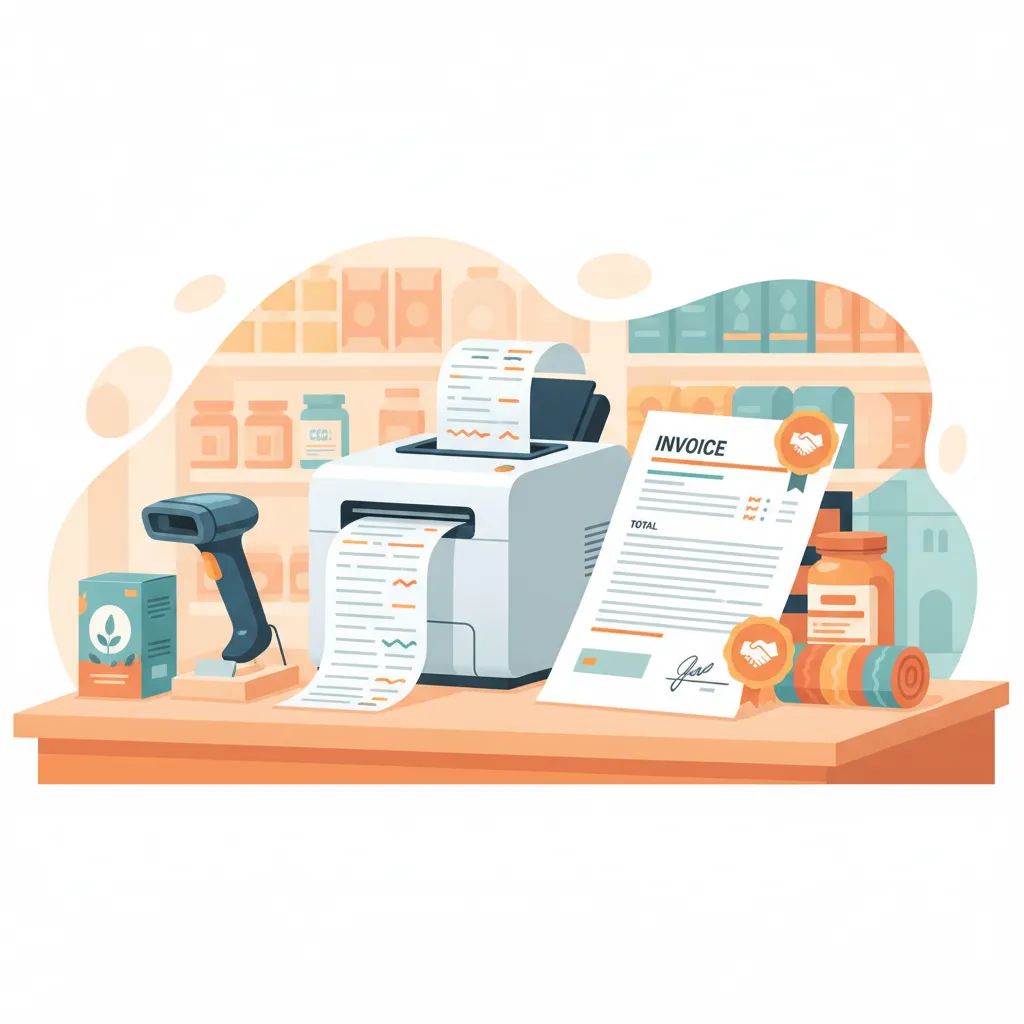
A handwritten scrap of paper with a handwritten number creates doubt. Did the cashier round up the total? Is the price matching the shelf tag? An itemised receipt produced on a thermal printer with your store name, contact number, date, item description, and return policy establishes immediate legitimacy.
-
Eliminate Bait-and-Switch Pricing:
Unrealistic discounts are now recognized as a scam indicator. If you run a clearance sale, ensure shelf tags, rack signs, and till scans match exactly. When a customer arrives at the counter and hears a higher price than what was marked on the rack, they immediately associate the discrepancy with deception.
-
Formalise Customer Purchase History:
Scammers never remember their buyers; professional retailers do. Maintaining a basic record of customer purchases allows you to confirm past orders instantly when regular patrons walk in without their paper receipt, solving dispute headaches before they escalate.
-
Honor Warranties and Counter Guarantees Professionally:
For mobile shops and electronics retailers, warranty disputes cause severe friction. Clearly print warranty periods and conditions directly on invoices. When a customer sees their specific product serial number or IMEI tied to a verifiable digital invoice, their confidence doubles.
-
Bring Structure to WhatsApp & Phone Orders:
Many brick-and-mortar shops take orders over WhatsApp for local delivery. If you ask for payment, do not send a blurry handwritten picture of a notebook. Send an official digital invoice detailing the stock items, unit costs, and delivery terms. It reassures the buyer that they are dealing with an established shop, not an unverified personal account.
"In retail, transparency is not just good ethics; it is your most cost-effective customer retention strategy. When market skepticism is high, the store with the clearest receipts and cleanest inventory wins the customer for life."
How CPOS Helps Pakistani Retailers Build Unshakeable Credibility
Operating a reputable retail business requires tools that keep counter transactions fast, error-free, and completely transparent. CPOS provides point-of-sale software designed specifically for businesses across Pakistan—including retail shops, garments stores, mobile shops, bakeries, medical stores, and hardware outlets—who want to move away from informal registers.
Here is how CPOS supports counter transparency and customer trust:
- Smart Barcode Billing & Instant Invoices: Eliminate manual pricing guesswork at the counter. With fast barcode scanning and automated invoicing, your customers receive a clear, itemised thermal receipt listing exact quantities, discounts, and prices within seconds.
- Customer & Supplier Management: Keep detailed purchase histories linked to customer profiles. When a regular client walks in for an exchange, reorder, or inquiry, you can look up their past sales history directly on the screen.
- Real-Time Inventory Tracking: Prevent taking money for goods you do not have in stock. Low-stock alerts keep your shelves organized and ensure you never disappoint a customer who traveled across town for a specific item.
- Offline Mode with Cloud Sync: Pakistani retail reality includes load shedding and patchy internet connections. CPOS offline mode lets you continue scanning items, processing sales, and printing receipts even when the internet drops. Your transactions are stored locally and automatically sync back to the cloud once connectivity is restored.
- Specialised Mobile & Electronics Support: For electronics and mobile retailers, CPOS enables tracking of accessories, warranties, and IMEI records, ensuring full accountability at the counter.
Starting Small Without Capital Risk
Upgrading your retail counter does not require heavy capital investment or complex IT infrastructure. CPOS offers a guided setup that takes just minutes to get running. Small businesses can get started on the Starter Plan completely free, which covers up to 100 sales per day and up to 1,000 product SKUs on a single branch setup.
As your store scales, CPOS provides straightforward paid tiers: the Basic plan at Rs 1,850 per month (up to 3,000 SKUs) and the Standard plan at Rs 3,900 per month (unlimited SKUs, up to 3 desktop users and 1 web user), both available with a 14-day free trial and an additional 10% saving on annual billing. Custom plans with dedicated onboarding are also available for larger multi-counter operations.
Conclusion: Turn Market Skepticism into Counter Loyalty
The NCCIA alert is a clear signal that Pakistani consumers are growing cautious of digital mirages, unaccountable sellers, and confusing transactions. While shady operators will continue to face crackdowns, genuine physical and neighborhood retailers have a golden opportunity to welcome back disillusioned buyers.
By professionalising your billing, tracking your stock in real time, and giving every customer clear, verifiable proof of purchase, you build a reputation that no online scam can imitate.
Ready to upgrade your counter and build lasting customer trust? Discover how easy professional retail management can be and start with CPOS free today.
===END===